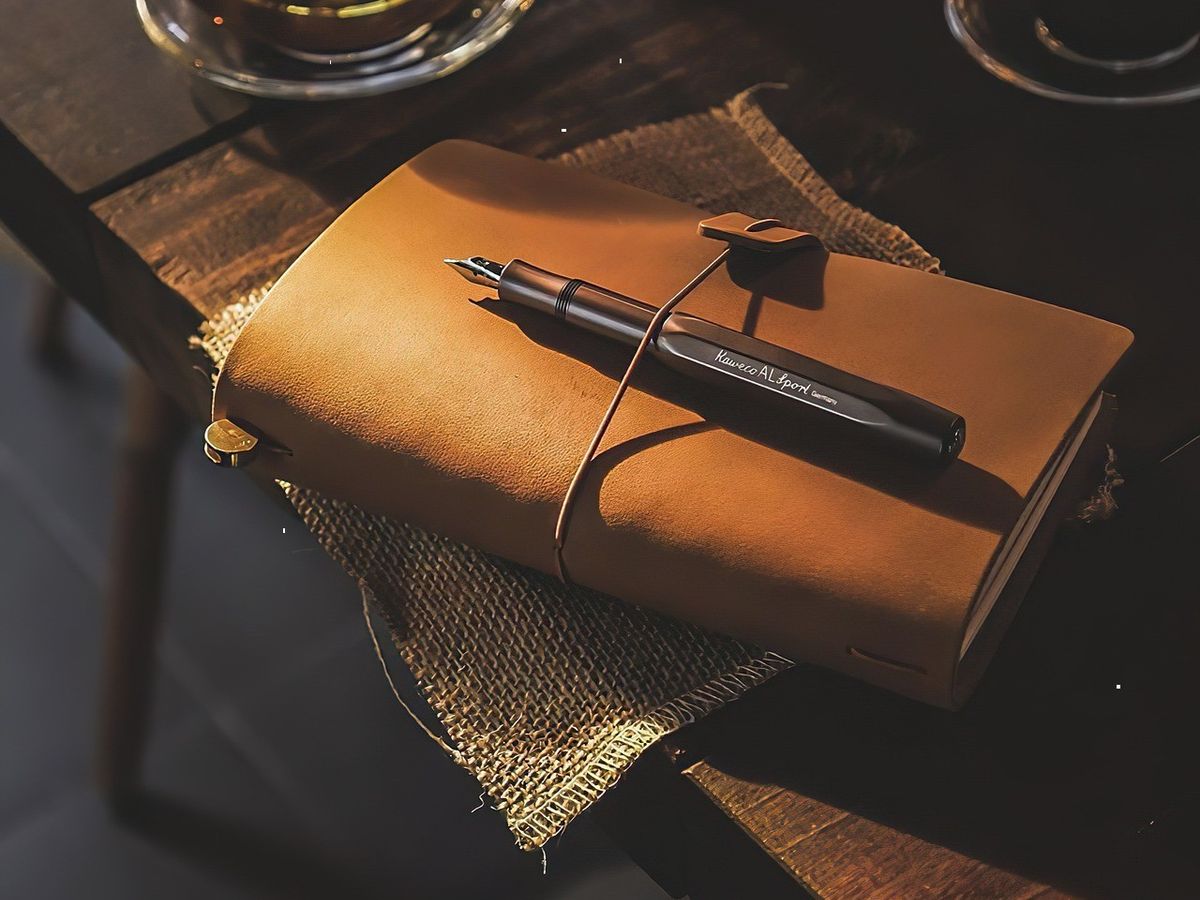

"Day 4. Wind SW, light. River up a foot. Coffee bad. Slept some." That is the whole entry. Frank Montrose wrote it in pencil in the summer of 1982, somewhere below St. Louis, in a borrowed johnboat he had no business taking to the Gulf of Mexico. Forty years later his daughter found the log in a coffee can and read that line so many times she could recite it. What the River Kept is the book she built around entries like it, and around the question of what a man is saying when all he writes down is the weather.
Delia Montrose published the memoir herself in May, and a book club in Alton, Illinois, has since carried it into a fourth printing. The book deserves its readers on its own terms. It is stranger and more disciplined than its word-of-mouth reputation suggests.
Two boats, one river
The structure is simple and the execution is not. Each chapter opens with a page or two from Frank's log, reproduced as he wrote it, abbreviations and all. Then Montrose picks up the same stretch of river from her own trip in 2023, when she made the run in a johnboat of her own, stopping where he stopped whenever she could work out where that was.
The log is terse to the point of rudeness. Frank records wind direction, river stage, fuel, and meals, and almost nothing else. His daughter treats that silence as a text to be read closely. When he notes that he "tied up early" three days in a row near Cape Girardeau, she goes looking for the reason, and the chapter that follows is the best in the book. She finds no answer. She finds a sandbar, a closed marina and a man at a bait counter who remembers her father's type, if not her father.
"My father wrote down the weather every morning and his feelings almost never," she writes. "I have come to think the weather was the feelings, filed under a different name."
That sentence is the book's method in miniature. Montrose was a claims adjuster for two decades, and she writes like someone trained to reconstruct an event from incomplete paperwork. She does not guess where guessing would be easy. She marks the edges of what she knows.
The prose of a practical person
Her sentences are plain and mostly short. They do not reach for lyricism, which is part of their power. When the lyric moments come, they arrive without warning and they land hard. Late in the book, alone on the water below Memphis, she describes the sound of a towboat passing in the dark.
"It was so big I heard it in my teeth before I saw it. I understood then that my father had not been brave. He had been too tired to be afraid, which on a river is almost the same thing."
She is equally good on the small humiliations of the trip, including a very funny passage about a paper chart that blows overboard. She never makes herself the hero. She is often cold, often lost and frequently wrong about distances, and she reports all of it with the same flat honesty she brings to her father's drinking, which the log records and the book does not soften.
"I have come to think the weather was the feelings, filed under a different name."
Where it holds back
The book's great strength is its fairness, and that is also where it falters. Montrose is so scrupulous about the people who are still living that some chapters feel sanded down. Her mother appears almost entirely in the margins, a presence at the kitchen window, a voice on the phone. Frank left his wife and two children for five weeks with little explanation, and the book never lets us hear what that summer was like on shore. Montrose has spoken about cutting that material at her mother's request, and it is hard to fault the choice. But the reader feels the gap. The memoir asks why a man left, and it cannot fully ask the person he left.
There is a structural stumble too. The lower river chapters, past Baton Rouge, speed up in a way that feels more like fatigue than design. Frank's log thins out as he nears the Gulf, and his daughter's sections follow suit. The arrival, which should be the emotional peak, is dispatched in a few pages. An editor at a larger house might have pushed for more here. A handful of typos could also still be fixed in a later printing.
These are real reservations, and they are small next to what the book gets right. Its final chapter returns to Alton, to the coffee can, and to one last entry that Frank wrote after he got home. It is the only entry in the log that mentions no weather at all. Montrose quotes it without comment, and she is right to.
The Verdict
What the River Kept is a quiet, exact memoir about the distance between what a parent says and what a parent means. Its restraint occasionally costs it depth, but its honesty never slips. Read it slowly, and read the weather reports twice.
What the River Kept by Delia Montrose (independently published, 248 pages, $17.99 paperback) is out now.
Books editor. Noor runs RedSquibble's reviews and interviews and chairs the process that produces the annual Debut Shortlist.