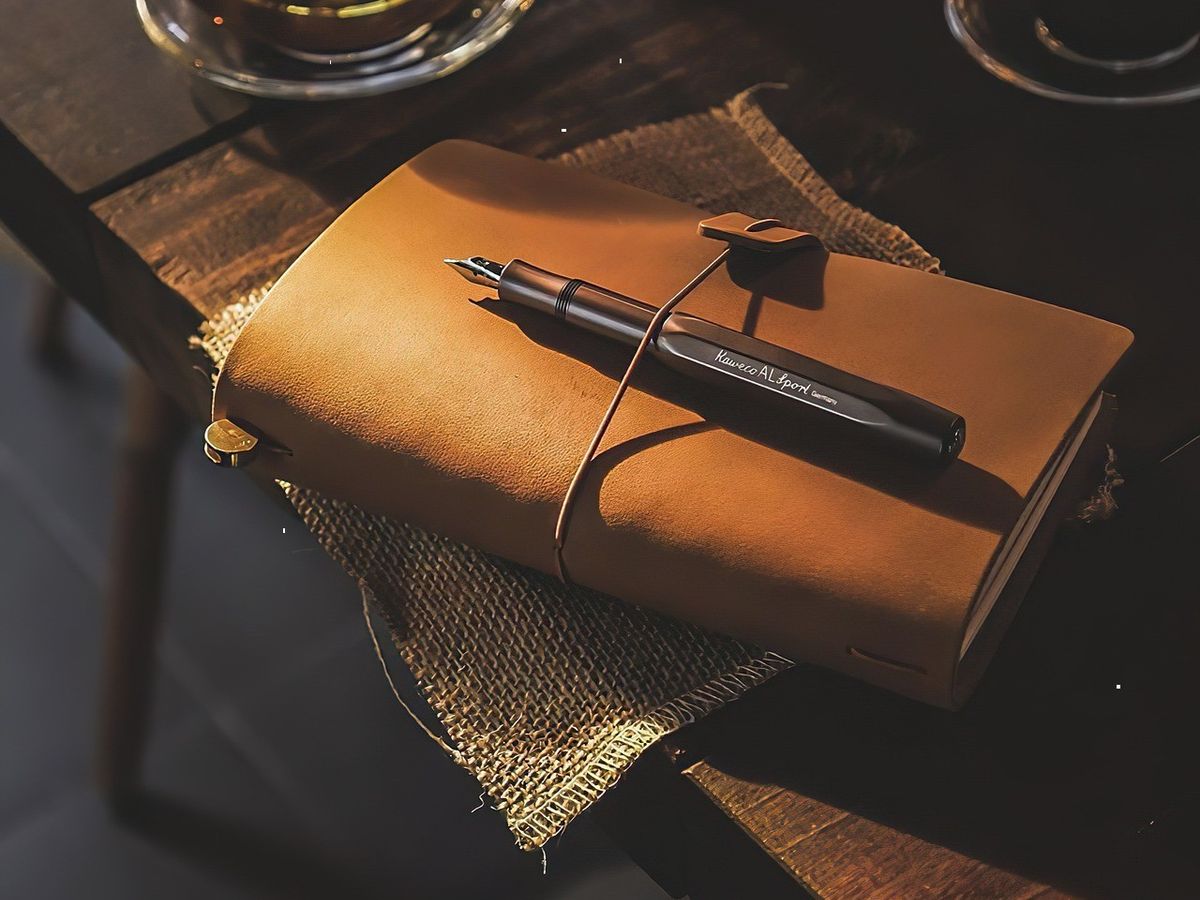

The river chart is still in the glove box of Delia Montrose's car. It is a spiral-bound set of Army Corps of Engineers maps, the pages soft as cloth, with every place she tied up in 2023 circled in green ink. Next to some of the circles she wrote a date from 1982, the day her father stopped at the same sandbar or the same fuel dock. Near Helena, Arkansas, there is a green circle with no date beside it at all. That was the night he kept going and she did not.
What the River Kept, her memoir of retracing her late father's trip down the Mississippi, came out in May in a first run of 300 copies. It is now in its fourth printing. We talked about the parts of the book that readers ask her about least, the craft of it, the fear of it, and the decision to put it into the world on her own terms.
Two voices on one page
Your father's log and your own account run side by side through the whole book. How did you keep them from blurring together?
He wrote in the present tense, always. "Wind out of the south. Tied up below Cape. Fish not biting." Short, like a telegram he was paying for by the word. So I wrote my half in the past tense, on purpose. It meant the two of us could never be on the same day, even when we were on the same stretch of water. I liked that. It was honest. I was always arriving after him.
Did you correct his spelling?
Not once. He spelled Girardeau four different ways across five weeks. My editor friend, a retired English teacher who read an early draft, kept circling them. I kept erasing her circles. If you fix a dead man's spelling, you're telling him he was wrong to be himself.
You made the trip in a sixteen-foot aluminum boat. What surprised you most on the water?
The size of everything that isn't you. My father's log barely mentions the towboats. In 2023 they were pushing thirty and forty barges at a time, a quarter mile of steel coming around a bend, and the wake would lift my whole boat like a hand. I also didn't expect how empty it would be. Below Alton there are two locks and then nothing but open river for more than a thousand miles. Some of the towns he wrote about have no dock anymore. A few have no town.
"If you fix a dead man's spelling, you're telling him he was wrong to be himself."
Was there a moment you wanted to quit?
Day nineteen, near Helena. A storm came up the river faster than I could get off it. I ran the boat onto a sandbar and sat under a tarp for six hours while the lightning walked around me. I called my brother and told him I was done. He said, "Dad went on from there." I said, "Dad was twenty-nine and stupid." He laughed and told me to sleep on it. In the morning the water was flat as a plate and I went on. That night never made it into the log, because it was never in his log. It's in the book because it was the first time I understood he must have been scared too, and just never wrote it down.
Choosing to go it alone
Why publish it yourself instead of looking for an agent?
Because my mother is eighty-four, and I wanted her to hold it. I read everything I could find about the traditional route and the timelines were two, three years before a book even existed. I didn't have that kind of time to spend on hoping. I found a printer in St. Louis, paid a designer I met through the library, and learned what an ISBN was on a Tuesday afternoon.
The cover is an aerial photograph of a river bending past a small town. Why that image?
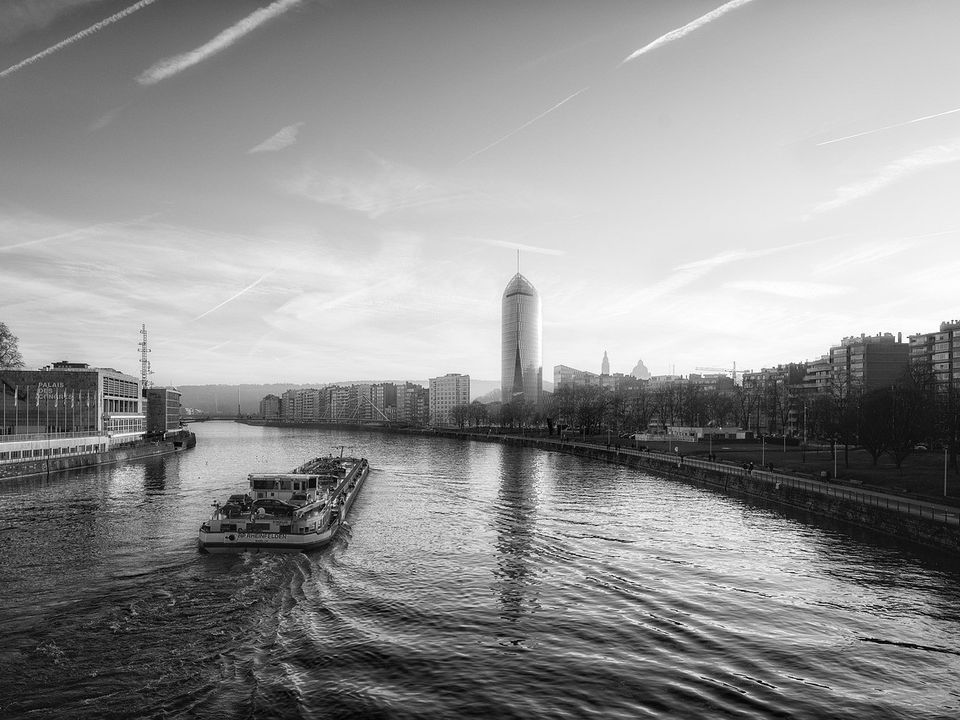
The designer I found through the library showed me twenty options and that was the only one I kept looking at. You can see the church steeple and the bend in the channel, and it looks like the view my father described from the bluffs above Grafton. He always said the river looks patient from up high and anything but patient from a boat. I wanted readers to start up high and end up in the boat with him.
Where does the title come from?
A line from the log, near the end. "River keeps what it wants." He was talking about a tackle box he dropped overboard at Natchez. But I read it a hundred times, and it stopped being about the tackle box.
What comes after
What have readers taught you about your own book?
That half of them are writing to me about their fathers. Men in their seventies, mostly, which I didn't expect. They send me pages. One man in Missouri mailed me a spiral notebook his dad kept while driving a grain truck in the 1960s, and asked me if it was worth anything. I told him it was worth everything, and that he should be the one to read it.
Is there another book?
Maybe. I want to go the other way this time, upriver to the headwaters in Minnesota. Nobody in my family ever did it, so there's no log to follow. I'd be writing in the present tense for once.
Montrose says she has already bought the charts. They are still in their plastic wrap, sitting on the passenger seat, waiting for her to decide.
What the River Kept by Delia Montrose (independently published, 248 pages, $17.99 paperback) is out now.
Features writer. Marcus reports on publishing, independent bookstores and how new authors break through.