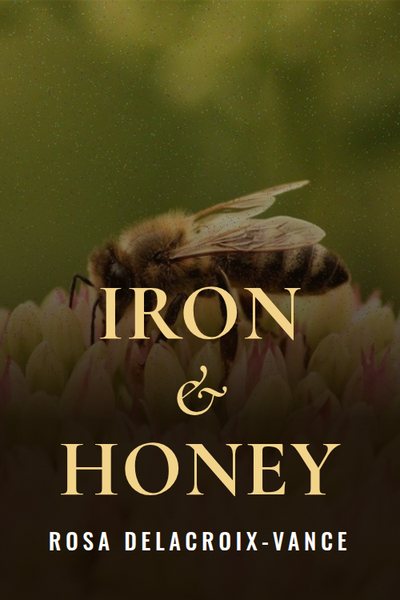
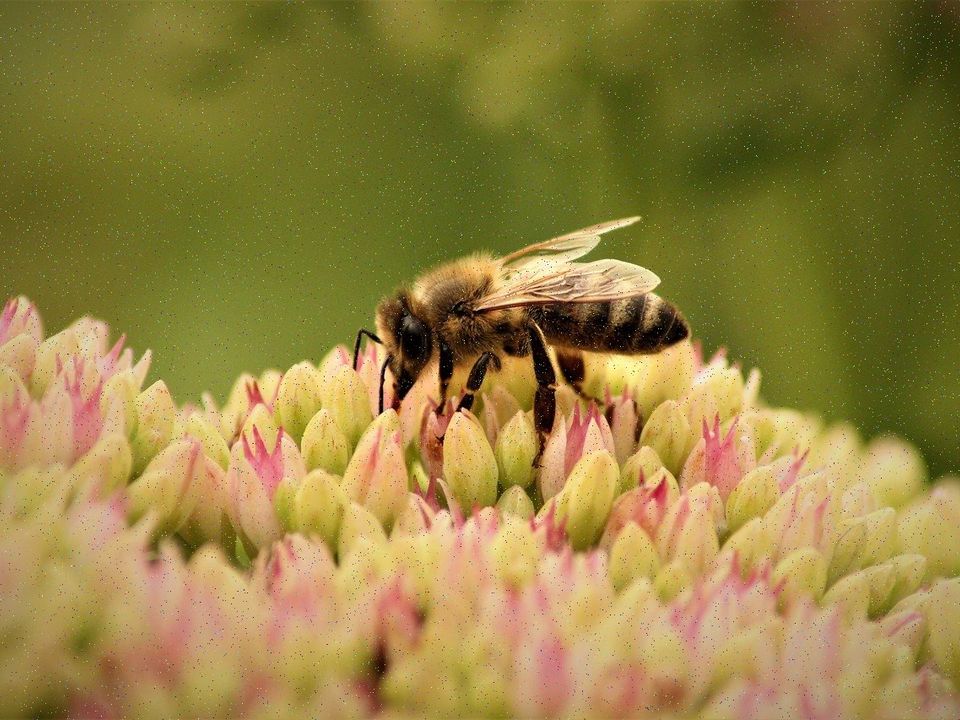
There is a scene about two hundred pages into Iron & Honey in which Isolde Marrow watches scout bees dance on the face of a comb. Each dance points toward a different place in the kingdom of Vell, and each one is a vote. The dances compete. Some grow stronger and some fade, and over the course of a long afternoon the hive reaches a decision no single bee could have made alone. Isolde, who has just been told she is a fraud, sits on an overturned bucket and understands for the first time how she became queen. "They were not choosing me," she thinks. "They were choosing where to live. I only happened to be standing there."
It is the most beautiful passage in Rosa Delacroix-Vance's first novel, and it captures what makes this big, strange fantasy worth your time. The premise is simple and wholly original. In Vell, the bees choose the queen. When the royal swarm leaves the palace apiary, it settles on one woman, and she rules. This time it has settled on the filthy, trespassing daughter of a disgraced beekeeper, and nobody at court is prepared to accept it. Isolde must hold a throne she did not ask for while the gold houses of the capital and the iron houses of the north each demand her loyalty. Before the book is half over, she has to decide which hive to betray.
A world built from the soil up
Delacroix-Vance keeps bees in Asheville, North Carolina, and drew the map of Vell before she wrote a single chapter. The result is a fantasy kingdom whose politics grow out of its geography with rare logic. The capital is rich because it sits among linden trees. The north is rebellious because its heather honey is bitter and cheap. The southern salt marshes produce nothing at all, and the people who live there are treated accordingly. Almost every turn in the plot can be traced on the endpaper map, and there is real pleasure in watching a war of honey prices become a war of swords.
The beekeepers' language she invented is equally well made. Keepers speak of a hive's thrumm when it is content, and call a turncoat a drift, the word for a bee that returns to the wrong home. The court fears a keeper who is smoke-soft, calm enough to open a hive with bare hands. These words arrive without explanation, and by the midpoint you are using them in your head.
"Honey is only flowers that have been argued over. Every jar in the palace was the end of a long, loud negotiation."
Isolde herself is a terrific heroine, sharp-tongued and practical and deeply unsure. Delacroix-Vance resists every temptation to make her a secret genius. She wins arguments by knowing how hives behave, and she loses them by assuming people behave the same way. Her father, stripped of his veil and forbidden to touch a frame, is the book's quiet moral center. "A keeper who is afraid of the sting," he tells her, "has already decided to be stung."
The long wait for the swarm
My reservation is the pace of the first act. At 496 pages, this novel can afford patience, but the opening 150 are overloaded with court factions, family lineages and the ceremonial duties of the Keeper of the Comb. Readers who have not studied the map and glossary beforehand may feel they have wandered into the third volume of a series. Several important characters are introduced by title and name in the same crowded chapter, and I lost track of which duke controlled which river more than once.
The final chapters also make their sequel ambitions very plain. The central conflict resolves, but several threads are left dangling in a way that reads less like ambiguity and more like a promise to the publisher.
The honey in the comb
Neither problem outweighs what Delacroix-Vance has achieved. The second half of Iron & Honey, once the swarm has spoken and the houses start to move, is gripping, sad and often very funny. A siege scene in which the defenders use a hive as a weapon is among the most original set pieces I have read in the genre in years. The ending, in which Isolde makes her choice about which hive to betray, is brave and bitter and exactly right.
"I was comb-sworn to all of them," Isolde says near the end. "So I broke the oath that would hurt the fewest."
The Verdict
Iron & Honey starts slowly and ends with one eye on its sequel, but its world is one of the most carefully imagined in recent fantasy, and its heroine earns her crown. Push through the first 150 pages. The bees know what they are doing, and so does Delacroix-Vance.
Iron & Honey by Rosa Delacroix-Vance (Farlight, 496 pages, $30) is out now.
Critic. Elena writes reviews and essays on poetry, memoir and the craft of the first book.