
The office of Rustbelt Editions sits above a tire shop on the South Side of Pittsburgh, and on a Tuesday afternoon in August the only sound in it was an air wrench downstairs and the flat snap of Walt Kaminski turning manuscript pages. He had a stack of about forty on the desk. He expected to say yes to one of them, maybe.
"People think small presses are where books go when the big houses say no," Kaminski said. "Sometimes that's true. More often we just got there first."
Kaminski's press publishes four books a year, and three of them this year are debuts. That ratio is not unusual among the small houses we spoke to this summer. For publishers without a backlist of bestsellers, first books are less a gamble than a business model, and when one breaks out, the press breaks out with it.
We talked to editors at five presses whose recent lists are unusually heavy with new names.
Reading the Whole Pile
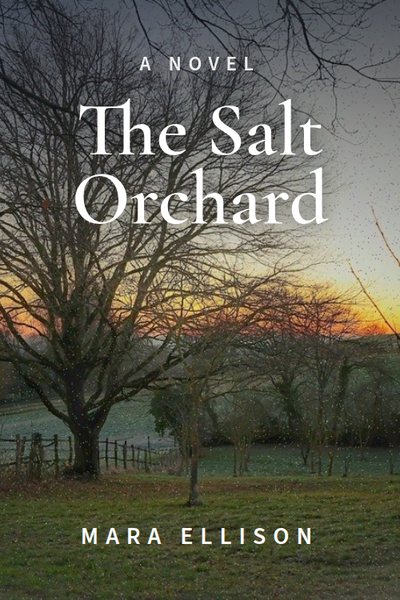
Harbor Light Press publishes eight to ten literary novels a year from a second-floor office near the ferry terminal. This year it had two of the six books on the RedSquibble Debut Shortlist, The Salt Orchard and Ledger of Quiet Things, which is a remarkable record for a staff of seven.
Ruth Adair has been an editor there for sixteen years. She reads every submission that comes in during the press's annual two-week open window, which this year meant roughly 2,300 manuscripts in a month and a half of evenings.
"I read the first page of everything and the first chapter of maybe a third," she said. "What I'm looking for is a writer who has clearly been doing this alone for a long time. You can feel it. The sentences have been sanded by someone with no one to impress."
Farlight, in Minneapolis, is the science fiction and fantasy imprint of a larger publisher, but its editors run it like a small press, with a list of about a dozen books a year. This September it published two debuts in a single month, Orbit of the Lesser Moons and Iron & Honey, books that could hardly be more different in size or temperament.
Gideon Lark, Farlight's executive editor, said the imprint has stopped asking whether a debut is commercial. "Genre readers are more adventurous than anybody gives them credit for," he said. "A 384-page novel with no villain and a 496-page fantasy with a four-page glossary both found readers this month. I think that tells you readers are hungry for books that trust them."
Presses With a Point of View
Kaminski founded Rustbelt in 2011 to publish fiction about industrial towns, and he has stuck to that mission with an almost stubborn focus. His authors have included a former coke oven worker, a union steward and, most famously this year, Colin Mercer, the retired machinist whose novel The Last Good Summer on Arden Lane is on this year's shortlist.
"I don't take many writers with MFAs," Kaminski said. "Nothing against them. It's just that the people who worked the mills are dying, and I would rather spend my time getting their books out while they're still here to sign them."
In Milwaukee, Finch & Quill has chosen poetry, the hardest category in publishing to sell and the easiest to ignore, and made first collections its specialty anyway. The press publishes five books a year, most of them debuts. Its best-known title this year is Tomasz Wren's A Grammar of Small Birds.
Hester Novak, who runs the press with two part-time staff, said she chooses books partly by how long the poet has been writing without a book. "I like a poet who has waited," she said. "Not because suffering is noble. Because by the time they send me something, they know which poems are theirs."
"I like a poet who has waited. By the time they send me something, they know which poems are theirs."
She prints first runs of 1,500 copies and sells most of them through readings.
Common Ground, in Asheville, publishes narrative nonfiction, about six books a year, with a bias toward writers who come from the working world rather than the academic one. Its current standout is Hannah Birch's Fieldwork, a collection of essays from a 900-mile walk along the edges of English and Welsh farmland.
Frances Yeo, the press's senior editor, said her authors tend to be experts in something other than writing. "I've published a surveyor, a lineman and a hospice chaplain," she said. "They all knew their subject cold. My job is to help them trust that the knowledge is interesting to people who don't have it."
Why It Works
None of these editors described their approach as charity. They talked instead about attention. A small press can give a debut author an editor who answers the phone, a publicist who knows the booksellers by first name and a cover designer who has read the book.
"A first-time writer at a big house is one of forty books that month," Adair said. "Here they're one of two. That difference shows up on the page, and then it shows up on the shelf."
Back in Pittsburgh, Kaminski was still reading when the tire shop closed for the day. He had set aside one manuscript by then, about a crane operator in Aliquippa. He said it would take him the rest of the week to decide whether it was the one.
The Salt Orchard by Mara Ellison (Harbor Light Press, 336 pages, $27), Orbit of the Lesser Moons by Kai Nakamura-Holt (Farlight, 384 pages, $28), The Last Good Summer on Arden Lane by Colin Mercer (Rustbelt Editions, 304 pages, $26.99), A Grammar of Small Birds by Tomasz Wren (Finch & Quill, 112 pages, $16) and Fieldwork by Hannah Birch (Common Ground, 224 pages, $18) are out now.
Senior writer. Julian profiles debut novelists and the lives they write around. He spent a decade as a features reporter at newspapers across New England.