Somewhere in Herefordshire, in the fifth essay of Fieldwork, Hannah Birch stops at a gate and counts. Hawthorn, blackthorn, hazel, field maple, dog rose, elder, holly. Seven woody species in a thirty-yard stretch of hedge. "An old rule of thumb says a hedge gains one species for every hundred years it stands," she writes. "The rule is not reliable. I counted anyway, because counting is a way of saying I was here and I looked."
That is as close to a mission statement as this quietly stubborn book allows itself. Birch, a former agricultural surveyor, spent 97 days walking the margins of farmland from Pembrokeshire to the north Norfolk coast. Fieldwork, her debut, gathers the nineteen essays that came out of it. It is on the 2026 RedSquibble Debut Shortlist, and it is the rare book of nature writing that seems more interested in the land than in the writer's feelings about the land.
A surveyor's sentences
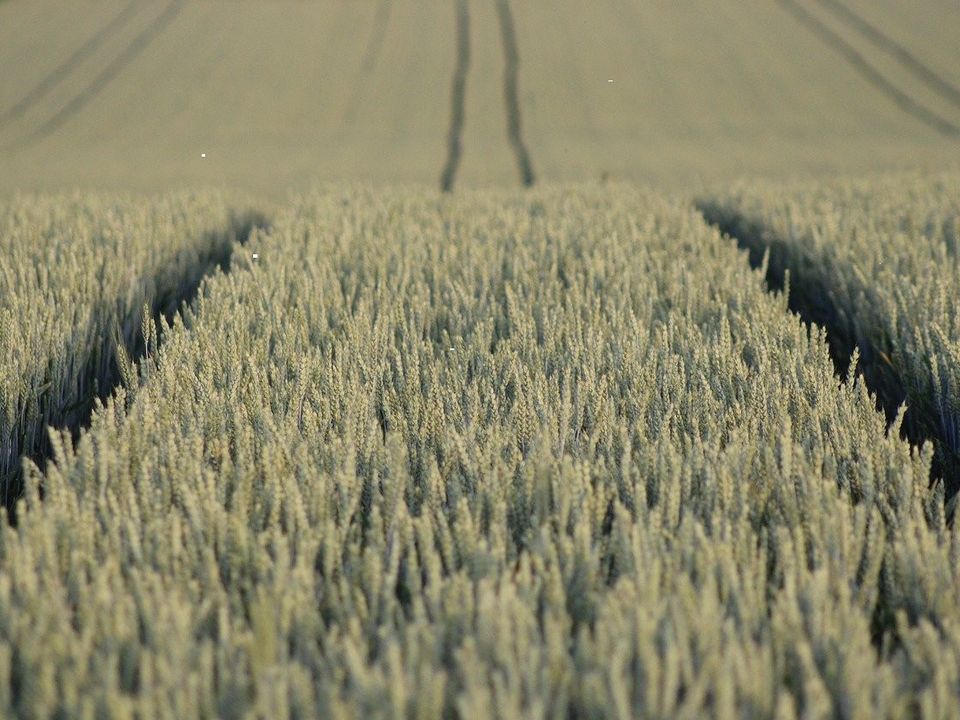
Birch spent fourteen years measuring fields for a living, and it shows in every paragraph. She writes in lengths and widths and compass bearings. She knows the difference between a hedge that has been laid and one that has been flailed, and she explains it without condescension. When she describes a field, you could draw it.
This precision is the book's great pleasure. In "Headland," she spends four pages on the strip of ground at the end of a field where a tractor turns, a place most people would not notice and few writers would think to describe. By the end of the essay it has become crowded with life, hares and skylarks and a patch of scarlet pimpernel that closes when rain is coming.
"Nobody plants the headland," she writes. "It is what the machine leaves behind when it turns around. I have come to think of it as the field's handwriting."
Her people are drawn with the same care. The farmers, contractors and landowners she meets along the way are allowed to be busy, suspicious, funny and occasionally rude. A hedge layer in the Marches, who appears in the essay "Laid," tells her flatly that he has no interest in being in a book. She respects him enough to describe his work in detail and his face not at all. It is a small act of tact, and the collection is full of them.
The long middle
The trouble comes in the middle third. The essays set in the Midlands, roughly the seventh through the twelfth, share a sameness of pace that the early and late sections avoid. The weather improves, the hedges thin, the arable fields widen, and Birch's attention, usually so alert, seems to settle into a routine. The observations remain accurate. They stop accumulating into anything.
Part of this is honesty. Long walks have long, flat days, and Birch refuses to invent drama. But a book is not a walk, and a sharper edit could have folded two or three of these essays together without losing anything essential.
I also wished, at times, that she would say more plainly what she thinks. Birch writes about hedgerow loss with a surveyor's restraint, noting the numbers and moving on. It is a principled stance and mostly an effective one. Yet there are moments, standing beside a hedge that has been grubbed out to make a field larger, when the reader wants her to be angry, and she declines. The reticence can read as grace. Occasionally it reads as evasion.
"Nobody plants the headland. It is what the machine leaves behind when it turns around."
What the edge becomes
Then the book reaches East Anglia, and everything sharpens. The final four essays, set in the flat country and on the coast, are the strongest writing in the collection. The land is lower and more exposed, and so is the prose. "Salt Edge," the closing essay, follows a field boundary that runs into a marsh and simply stops, eaten by the sea over several winters.
Birch stands at the end of it with her old surveyor's habits intact. She paces the remaining hedge. She notes the bearing. And then, for the first time in the book, she lets the measuring fail.
"I had spent my working life recording where one thing ends and another begins," she writes. "Here was an edge that would not hold still long enough to be recorded. I wrote down the date instead. It was the only fixed point I had."
It is a beautiful close, earned by all the careful counting that came before it. The margin she has followed across two countries turns out to be something that moves, and the book ends by admitting that a border is only ever a record of a particular day.
The Verdict
Fieldwork is a patient, deeply observed debut that finds a whole country in the strips of land most of us drive past. Its middle wanders, and its restraint sometimes shades into reticence, but its opening and closing essays are as good as anything in recent nature writing. Read it one essay at a time.
Fieldwork by Hannah Birch (Common Ground, 224 pages, $18) is out now.
Critic. Elena writes reviews and essays on poetry, memoir and the craft of the first book.