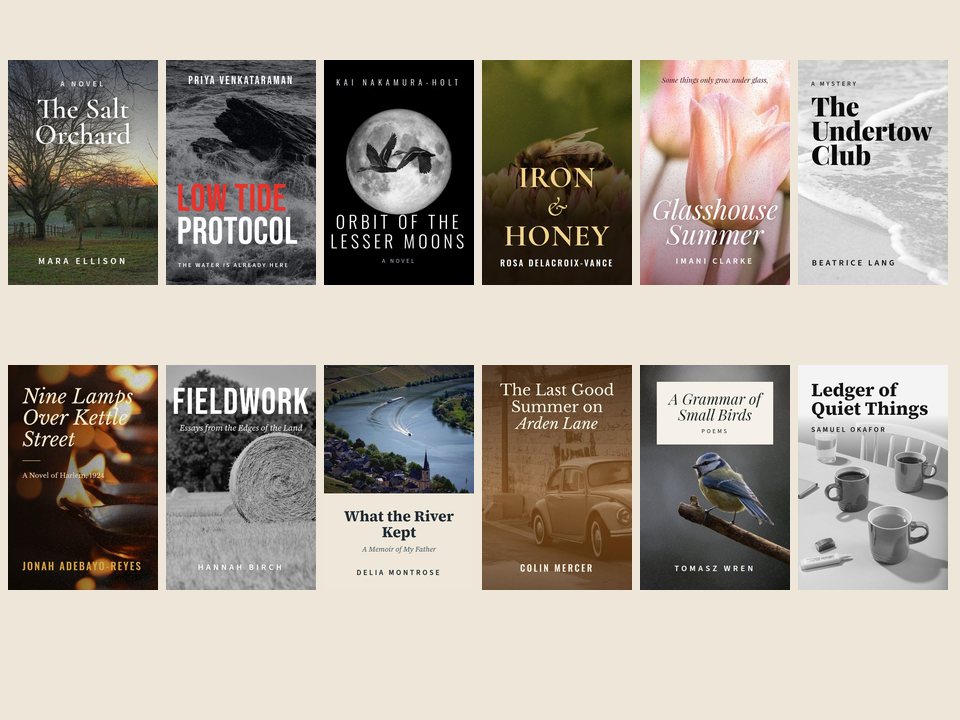

The advance copies started arriving in July, and by the end of August the shelf behind my desk had tipped over twice. October is always crowded. Publishers like the month because readers are back from summer and not yet buried in holiday gift lists. This year it is crowded with first books, and a surprising number of them are very good.
I asked a few people who spend their lives with new writers what they are watching for. June Takahashi, who runs Highwater Books in Astoria, Oregon, said she reads October galleys with a specific question in mind. "I want to know which ones I'll still be pressing on people in February," she said. "The fall rush is loud. The books that last are the ones that are still talking after it gets quiet."
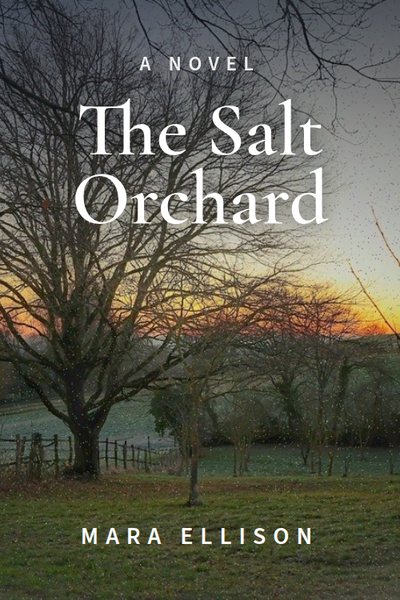
Ruth Adair, the editor at Harbor Light Press who acquired The Salt Orchard, put it more simply. "A debut has one season to find its first thousand readers," she said. "After that it's either traveling on its own or it isn't."
Here are twelve that we think will travel.
The Weight of Snowmelt by Ingrid Solvang
A glaciologist's daughter comes home to a Montana ranch after her mother's research station is shut down, and finds forty years of ice-core notebooks stacked in the hay loft. Solvang spent eight summers as a wildland firefighter, and she writes weather like someone who has had to outrun it. Harbor Light Press, October 6.
Small Hours at the Palomar by Luis Ferreira-Mata
In 1957, a night auditor at a desert motel outside Barstow keeps a guest register that never quite balances. Each chapter follows one late arrival, and slowly the missing money becomes the least interesting secret in the building. Ferreira-Mata, a former hotel manager, knows exactly what a front desk sounds like at 3 a.m. Lantern House, October 13.
Every Dog in Bellmont County by Abigail Tran
These linked essays come from eleven years as a rural animal control officer, and they are funnier and sadder than you expect. Tran is sharp on poverty, loyalty and the strange intimacy of knowing a whole county by its dogs. The piece about a blind beagle named Senator is already being photocopied and passed around. Common Ground, October 20.
Deadwater Channel by Graham Oyelaran
A ferry dispatcher on Puget Sound notices that one boat keeps losing four minutes on the same crossing. The tension here is procedural and patient, built out of radio logs and tide tables, and the payoff is worth every page. Oyelaran worked dispatch for the state ferry system for fourteen years. Northwater Books, October 6.
The Lantern Tithe by Sunniva Okoro
In a river city where every household owes the temple one lit lamp a night, a candlemaker's apprentice discovers that the flames are feeding something beneath the water. Okoro builds her world through trade and ritual rather than maps, and the magic always has a cost somebody pays in wax and time. Farlight, October 27.
Second Pressing by Carmen Ybarra
A Sonoma winemaker on the edge of losing her family's vineyard falls for the bankruptcy attorney assigned to sell it. Ybarra writes banter with real snap and never lets the money problems turn into mere backdrop. She grew up picking grapes in the valley she writes about, and the harvest chapters smell like crushed fruit. Rosewater, October 13.
The Vestry Key by Philippa Dunne
A church organist in a Vermont mill town finds the parish treasurer dead in a vestry that only three people can unlock. Dunne, a working organist, gives the book a lovely rhythm of hymn numbers, choir squabbles and very cold mornings. The solution is fair, clever and quietly heartbreaking. Bellwether, October 20.
Ordinary Weather by Rhiannon Ashby
Ashby's first collection moves through one year on a Wisconsin dairy farm, one poem for each week. The early poems are plain as fence wire, and then around July something opens up. A long sequence about her grandfather's hands has the steady pressure of a great elegy. Ashby drives a school bus in Sauk County. Finch & Quill, October 6.
Shift Whistle by Teodor Kasprzak
Twelve stories set around a glass plant in the Mon Valley, each beginning at the moment a shift changes. Kasprzak worked the batch house for twenty-six years, and his people talk the way people actually talk at the end of a double. The final story, about a retirement party nobody wants to leave, is a small masterpiece. Rustbelt Editions, October 27.
What the Wind Owed Us by Maren Holloway
Three generations of a Nebraska farm family survive a tornado in 1953 and spend the next sixty years arguing about what they saw that afternoon. Holloway alternates voices across decades with real control, and the kitchen-table fights are the best in any novel this fall. She teaches fourth grade in Kearney. Tallgrass Books, October 13.
Twelve Languages for Home by Farida Nasser
A medical interpreter in Dearborn, Michigan, rebuilds her late grandmother's lost village by asking every patient she translates for to describe the house they grew up in. The result is a memoir, a map and a quiet argument about what language cannot carry. Nasser is precise, generous and deeply curious on the page. Blue Hour Editions, October 20.
Oyster Year by Tobias Greer
One boy, one skiff and one bad oyster season on the South Carolina coast in 1986. Greer, a marine biologist who now studies the same creeks, writes the tidal marsh with a scientist's eye and a teenager's heart. The father and son at the center of the book barely speak, and every silence counts. Saltbox Press, October 27.
How We Chose
We read forty-one October debuts for this list. Some were polished and forgettable. A few were rough in places and impossible to put down, and those are the ones that made it.
Walt Kaminski, the editor at Rustbelt Editions who bought Shift Whistle, said that is usually how it goes. "The first book is allowed to have a loose thread or two," he said. "What it can't be is careful. Careful never gets anybody to page ten."
"A debut has one season to find its first thousand readers. After that it's either traveling on its own or it isn't."
If you only pick one, make it the one whose first page surprises you. Start there, and then come back for the others.
All twelve books are scheduled for October 2026 publication. Dates are subject to change.
Books editor. Noor runs RedSquibble's reviews and interviews and chairs the process that produces the annual Debut Shortlist.