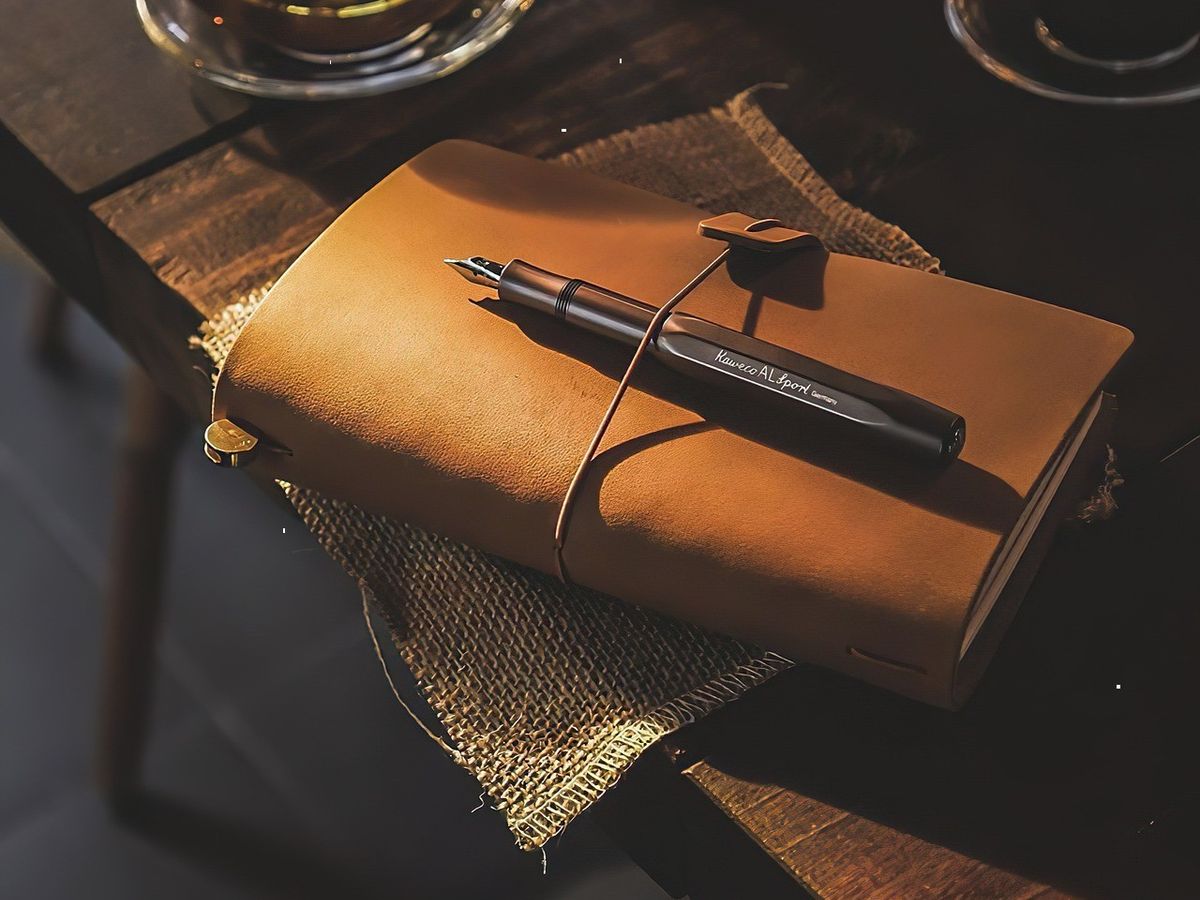
The coffee maker in Samuel Okafor's kitchen is set to start at twenty past five in the morning. By half past five he is at the table with a mug, a legal pad and a laptop he does not open until he has written something by hand. At half past six he stops, even if he is in the middle of a sentence. By a quarter past seven he is on the freeway, heading to the accounting firm in west Houston where he has worked for eleven years.
"People ask me when I'm going to quit," Okafor says. "I tell them I already have a job I like. The book was written by the man who has that job. I don't know who would write the next one if he left."
Ledger of Quiet Things, published in March by Harbor Light Press, is his first novel. It follows Emeka, an accountant in Lagos who keeps a private second ledger of small kindnesses he witnesses, and who one day finds an entry in it that he did not write. The book is on the 2026 RedSquibble Debut Shortlist. It was written in roughly 1,400 one-hour sessions over five years.
The hour
Okafor did not set out to write at dawn. For a long time he tried evenings. By nine at night, he says, he had nothing left. "My brain had been reconciling accounts for ten hours. It would only produce spreadsheets."
The morning hour began in 2020 as an experiment. He gave himself two weeks. He never went back.
The rules are simple and he keeps them strictly. No email before half past six. No phone at the table. He writes by hand first because the laptop tempts him to revise. He counts the session as a success if he produces a single paragraph he would keep. On good mornings he gets two pages. On bad ones he rereads the previous day's work and fixes the verbs.
Tax season is the exception, and he plans for it like a farmer plans for winter. From February to mid April his hours at the firm stretch past sixty a week. He still gets up at the same time, but he does not try to write new pages. He reads his own draft instead and makes notes in the margins.
"January is when I push hard, because I know what's coming," he says. "In March I just keep the book warm. I visit it. You don't want to come back in May and find it's a stranger."
Debits and credits
Anyone who has taken an accounting class will recognize the architecture of the novel. It is built on double entry. The chapters alternate between Emeka's working life, told in the clipped language of his firm, and the second ledger, told in a looser, warmer voice. Every event in one column has a matching entry in the other. The mysterious unsigned entry is, in accounting terms, a transaction without a source.
"In double entry, nothing appears from nowhere," Okafor says. "Every debit has a credit. So when Emeka finds a line he didn't write, it frightens him, and it also offends him as a professional. It means the books don't balance, and he cannot live with that."
He sketched the structure on actual ledger paper before he wrote any scenes. His editor, Ruth Adair, still has a photocopy of the original grid pinned above her desk at Harbor Light. It has two columns, forty-two rows and a total at the bottom that he adjusted nine times.
Okafor grew up in Enugu and moved to Texas for graduate school at twenty-three. He sat the CPA exam in 2009. His mother, he notes, still refers to the novel as "the hobby."
"I don't need four free hours. Nobody gets four free hours. I needed one hour that nobody else was allowed to touch."
Small windows
Readers write to him now, many of them with jobs that eat their days. Nurses. Teachers. A long-haul trucker in Arkansas who is drafting a novel at truck stops. What they want to know, mostly, is how.
His answer is unglamorous. Pick a window you can actually protect, even if it is small. Make it the same window every day, so you stop having to decide. Measure the work in sessions, not word counts, and forgive the bad sessions quickly.
"The mistake is waiting for a sabbatical," he says. "The sabbatical doesn't come. Or it comes and you spend it cleaning the garage. An hour you actually show up for is worth more than a month you're planning to have."
He adds one more thing, as an accountant would. "Keep records. Write down what you did each morning, even if it was nothing. After a year you'll have proof that you're a writer. Some days you'll need the proof."
He is a few hundred sessions into a second novel. He would not say what it is about, only that it has three columns this time.
Ledger of Quiet Things by Samuel Okafor (Harbor Light Press, 288 pages, $26) is out now.
Features writer. Marcus reports on publishing, independent bookstores and how new authors break through.