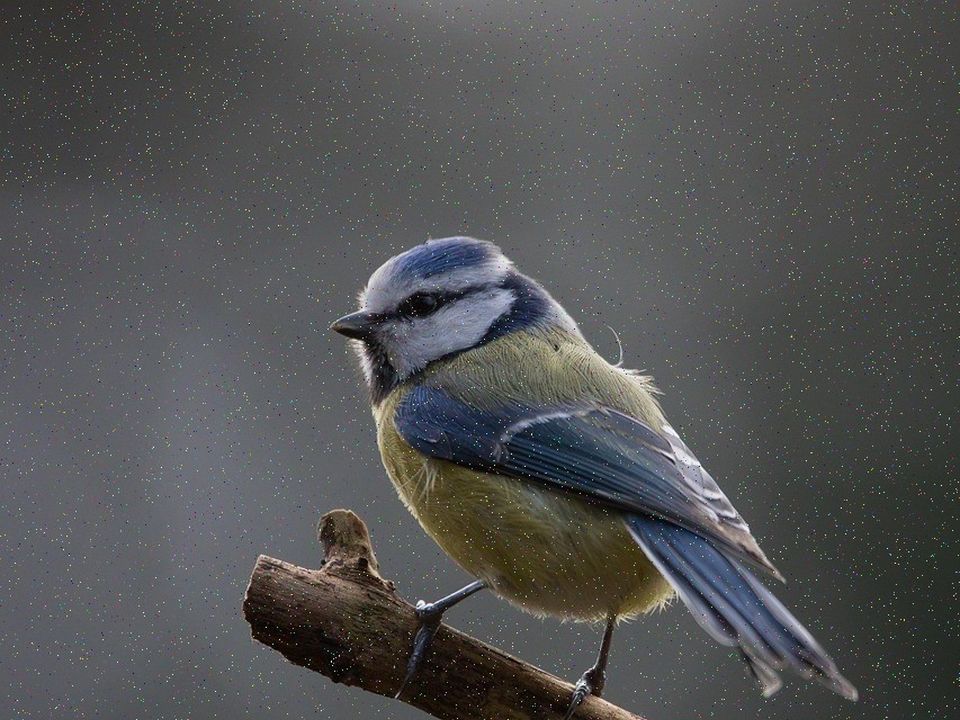
The first thing you hear in A Grammar of Small Birds is a bird that refuses to be modest. "The wren does not apologize for the size of its song. I am trying to learn this." It is a startling way to open a debut. The lines are plain, almost conversational, and they set the terms for everything that follows. This is a book about a small voice deciding to be loud anyway.
Tomasz Wren wrote the collection over a single winter in Milwaukee, in the months when his wife was recovering in the hospital. He spent long afternoons in a chair by her window, listening to sparrows, juncos and one persistent cardinal in the parking lot trees. She recovered. The book knows that, and it also knows that for most of that winter nobody could promise it.
"I didn't have anything to do with my hands," Wren told me. "So I started writing down what the birds were doing. It was the only news that didn't come from a doctor."
A second language
Wren was born in Gdansk and teaches English as a second language to adults. You can feel both facts in the poems. He is fascinated by grammar as a physical thing, by how tense and number and mood shape what can be said. Several poems borrow the form of a language lesson. One, titled "Past Continuous," reads in full like a worksheet that has gone badly wrong.
"She was breathing. The machine was counting. / I was learning the word for was."
That is the book at its best. The joke of the grammar exercise turns, in two lines, into something that is hard to read twice. Wren rarely raises his voice. He lets a single word, here "was," carry the weight of what he will not say directly.
He told me his students taught him the method. "When you are learning a language, you cannot say complicated things," he said. "You have maybe two hundred words. So you say the true thing with the small words. I wanted the poems to sound like my best students."
Not every experiment lands. A sequence of five prose poems in the middle of the book, each named for a hospital floor, loses the tension that the tighter forms hold so well. The images become catalogs. The small birds disappear for too long. It is the one stretch where the collection feels like it is filling the calendar between better days.
Birds as witnesses
The birds are never quite symbols. Wren is too careful an observer for that. He notices that juncos feed on the ground and sparrows in the hedge, that the cardinal sings earliest on the coldest mornings, that a crow can make a sound like a door closing. These details give the book its texture, and they keep grief from becoming a fog.
In "Feeder," the speaker watches a line of sparrows take turns at a seed tray someone has nailed to the hospital's loading dock. "Nobody told them to share. / They share the way water shares a glass."
The effect is not consolation, exactly. The birds do not care about the people inside. That indifference turns out to be a kind of comfort. Life goes on outside the window whether or not anyone is watching it, and on the worst days Wren seems grateful to be excused from having to hold it all up.
"It was the only news that didn't come from a doctor."
The sonnet at the end
The book closes with "Wren, February," a sonnet that Wren rewrote, by his count, 212 times. He kept every draft. He said the number embarrasses him a little.
"It kept being almost right," he said. "I would fix one line and another would break. Around draft 150 I understood that I was not really revising the poem. I was waiting to see how the winter ended."
The finished sonnet is worth the wait. It is formally strict, with a turn that arrives exactly where the form says it should, and it earns its closing couplet without forcing it. The final lines return to the opening image, the tiny bird with the oversized song, and give it to the speaker at last. "I let the small bird teach me how to stay. / I sang, and it was loud, and it was day."
After a hundred pages of restraint, that last line is almost reckless. It is also the right ending. The poet has spent a winter learning to take up room, and he finally does.
A Grammar of Small Birds is a slim book, and it has a few slack pages. But it is the kind of debut that trusts its readers to hear the quiet things. Stay with it through the cold months. The ending is worth it.
A Grammar of Small Birds by Tomasz Wren (Finch & Quill, 112 pages, $16) is out now.
Critic. Elena writes reviews and essays on poetry, memoir and the craft of the first book.