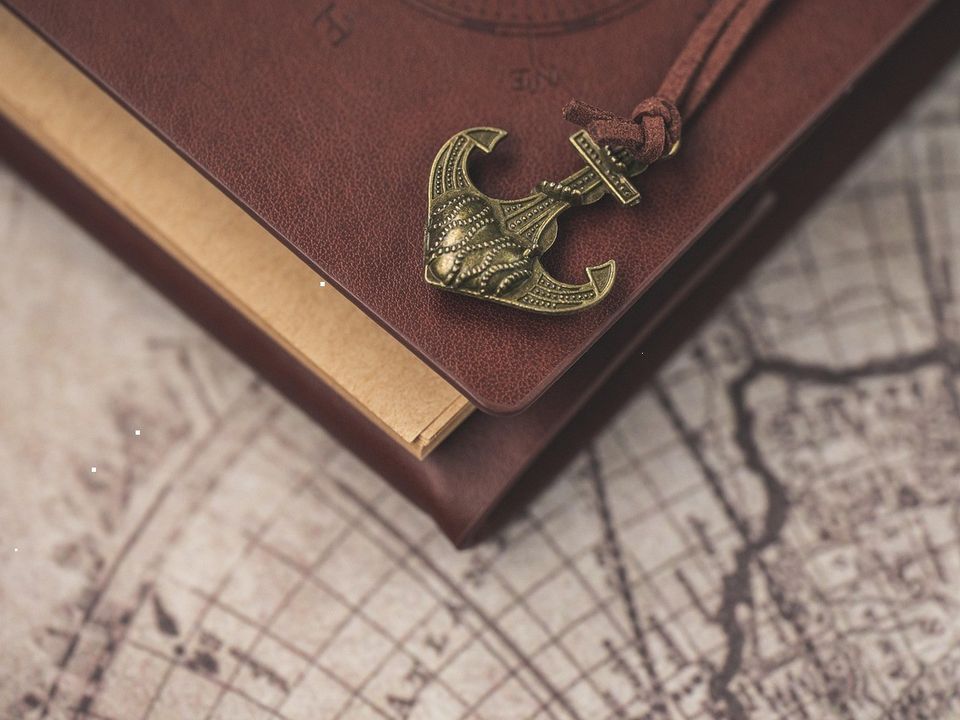
The map hangs in Rosa Delacroix-Vance's kitchen in Asheville, North Carolina, in a frame she bought at a yard sale for four dollars. It is drawn in pencil on a sheet of butcher paper, and it has been erased so many times that the rivers of the kingdom of Vell look like they are running through fog. Out the window behind it, past a row of tomato cages, three white hive boxes sit on cinder blocks. On a warm September afternoon you can hear them through the glass.
"I knew where every river went before I knew anybody's name," she says, tapping a bend in the paper. "The characters had to come later. They had to live somewhere first."
That somewhere is the setting of Iron & Honey, her debut novel, out this week from Farlight. At 496 pages it is a big book, and it rests on a strange and lovely premise. In Vell, the bees choose the queen. When the old monarch dies, the royal swarm leaves the palace apiary and settles on one woman in the capital, and that woman rules. The heroine, Isolde Marrow, is the daughter of a disgraced beekeeper, and before the book is half over she must decide which hive to betray.
A Kingdom Built From the Ground Up
Delacroix-Vance started keeping bees nine years ago, after a neighbor moved away and left her a single colony in a cracked wooden box. She had no plan to write a novel. Her only plan was to keep the bees alive.
"The first winter I lost half of them and cried in the yard," she says. "The second winter I lost none, and I started paying attention to how they decide things. A swarm picks a new home by a kind of vote. Scouts come back and dance for the site they like, and the dances compete. I thought, what if a country worked like that, and what if the people had to live with whatever the bees picked?"
She did not write a word of prose for more than a year. Instead she drew. The first map of Vell came together at her kitchen table with a mechanical pencil and a stack of wildflower field guides open beside her. She marked where clover would grow and where it would not. She put the capital on a river because bees need water. She placed salt marshes along the south coast, where no honey could be made, and those marshes became the home of the kingdom's poorest province.
"Geography is politics," she says. "If you know who has the flowers, you know who has the money."
That logic runs through the book. The rebel houses of the north are rebels because their heather honey is bitter and cheap. The palace is rich because it sits on eleven miles of linden trees. Readers who flip to the endpapers (Farlight printed the map in two colors, amber and black) will find that nearly every turn of the plot can be traced with a finger.
A Language for the Hives
The map led to a second obsession. Delacroix-Vance wanted the beekeepers of Vell to speak to one another in a trade language outsiders could not follow, the way sailors and printers once did. She built about three hundred words of it and kept them in a spiral notebook she calls "the dictionary," though most of its pages are crossed out.
"I wanted the reader to feel like a guest in the apiary, a little lost at first, then fluent by the end."
The glossary at the back of the finished book runs four pages. Her editor at Farlight asked her to cut it to one. She argued for all four and won.
"Fantasy readers love a glossary," she says, laughing. "They'll forgive you a lot if you give them something to study."
A Short Glossary of the Hive Tongue
Five words from the book, defined in the author's own phrasing.
- Thrumm. The low hum a hive makes when it is content. Between keepers, it also means "all is well."
- Swarrow. The day a royal swarm leaves the palace to choose a new queen. A holiday, and a day of great fear.
- Comb-sworn. Bound by an oath made with a bare hand pressed into fresh wax. Breaking it is the worst thing a keeper can do.
- Drift. A bee that returns to the wrong hive. In the hive tongue, also the word for a spy or a turncoat.
- Smoke-soft. Calm under pressure. Said of a keeper who can open a hive without a veil.
The Honey on the Table
Before I left, Delacroix-Vance pulled on a jacket, lit a smoker, and opened one of the boxes in the yard. She moved slowly, without gloves, and lifted a frame heavy with capped honey into the light. The bees walked across her knuckles and did not sting.
"This is the whole book, really," she said. "You go slow, you pay attention, and eventually they let you in."
She has already started the map for a sequel. It is on a fresh sheet of butcher paper taped to the kitchen table, and so far it has rivers, a coastline, and no names at all.
Iron & Honey by Rosa Delacroix-Vance (Farlight, 496 pages, $30) is out now.
Features writer. Marcus reports on publishing, independent bookstores and how new authors break through.