
Every bookseller knows the customer. She comes in on a Saturday, picks up a first novel from the front table, reads the flap, reads the blurbs, reads the flap again and puts it back. Then she buys a paperback by an author she has read eleven times before.
"It's not that people don't want to try new writers," said Owen Pritchard, who has worked the floor at Two Rivers Books in Dayton, Ohio, for fourteen years. "It's that they've been burned. They bought the big debut everybody was talking about and gave up on page sixty. Now they don't trust themselves to choose."
That is a shame, because first books are often where the most surprising writing lives. The authors have spent years on them with nobody watching. There is no house style yet, no series to feed. The trick is finding the one that fits you. We asked the people who make those matches for a living how they do it.
Start With the Evening, Not the Book
Beatriz Colón, a readers' advisory librarian at the Eastfield Branch of the Millbrook Public Library in Illinois, begins every conversation with the same question. She does not ask what a patron likes to read. She asks when they read.
"Twenty minutes on the train is a different reader than two hours on a Sunday," Colón said. "If you only have twenty minutes, you want short chapters and a strong pull at the end of each one. If you have Sunday, you can handle a book that takes its time."
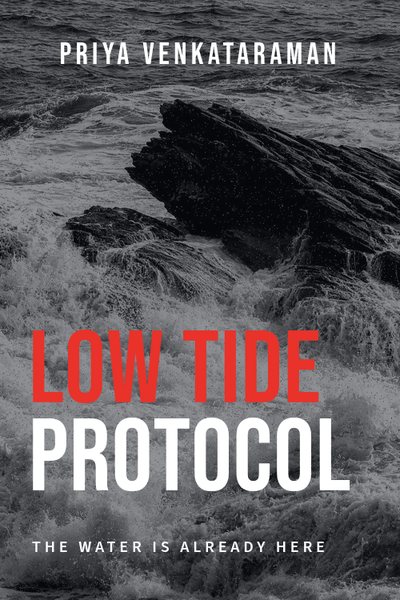
By that measure, a reader with a commute might reach for Low Tide Protocol, Priya Venkataraman's thriller about a flood modeler named Anika Rao, which moves in tight scenes and rarely lets a chapter end calmly. A reader with long, quiet evenings might take on Nine Lamps Over Kettle Street, Jonah Adebayo-Reyes's slower, richer novel of 1924 Harlem, which rewards patience with a whole neighborhood.
Read the First Page, Then the Ninety-Ninth
Almost everyone we spoke to recommended some version of this test. The first page tells you what the author worked hardest on. A page from the middle tells you what the book is really like.
"Openings get polished to death," Pritchard said. "Everybody's first page is good now. Flip to somewhere around page one hundred and read a full page. If you want to keep going, buy it. If you're skimming, you have your answer."
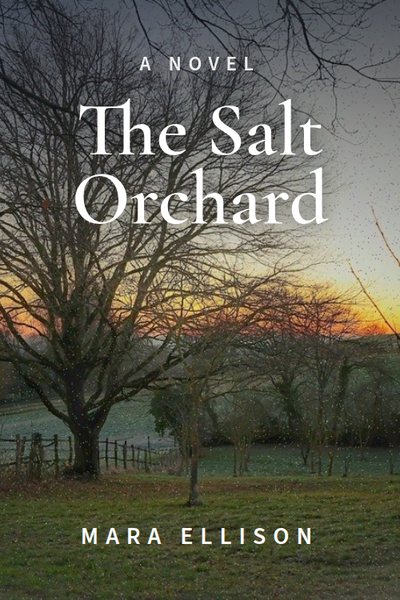
He tried it in front of me with The Salt Orchard, Mara Ellison's novel about three sisters and a failing orchard on the Maine coast. He read a page from the middle, closed the book and nodded. "That's the same writer who wrote the first page," he said. "That's all I need to know."
Go Short, Go Sideways
Colón has a quiet rule for readers who keep abandoning books. Give them something short, or something from a form they don't usually read.
"A lot of people who say they can't finish novels will finish a book of poems in an afternoon," she said. "And then they feel like readers again, which is half the battle."
She has been handing out A Grammar of Small Birds, Tomasz Wren's 112-page debut collection, to exactly those patrons. She said most bring it back within the week and ask for something else.
Genre can do the same work. Maribel Aquino, who runs a small shop called The Reading Porch in Galveston, Texas, often steers hesitant readers toward mysteries. "A mystery makes you a promise on page one," she said. "Somebody is going to find out what happened. That promise carries a lot of people to the end who would have drifted off otherwise."
Her current pick is The Undertow Club, Beatrice Lang's mystery about a century-old winter swim club in a Massachusetts seaside town. "It's cold, it's funny and it's fair," Aquino said. "People come back and tell me they guessed wrong."
"A mystery makes you a promise on page one. Somebody is going to find out what happened."
Trust a Person Over a List
Every expert we talked to said the same thing, in different words. The best way to find a debut you will finish is to ask someone who knows you, or who is willing to get to know you for five minutes at a counter.
"Lists are fine. I read them," Pritchard said. "But a list doesn't know you hate books where the dog dies. I do, because you told me."
Colón keeps an index card for regular patrons with the last three books they loved and the last one they abandoned. The abandoned book, she said, tells her more.
And be willing to stop. Every librarian and bookseller we asked gave the same permission. A debut you drop at page fifty is not a failure. It is information.
"Life is too short and the stack is too tall," Aquino said. "Put it down and try the next one. The right book will still be waiting."
For the customer at the front table, Pritchard has a simple suggestion. Pick up the debut. Read page ninety-nine. Then come find a bookseller and tell them what you thought.
Low Tide Protocol by Priya Venkataraman (Northwater Books, 368 pages, $29), The Salt Orchard by Mara Ellison (Harbor Light Press, 336 pages, $27), A Grammar of Small Birds by Tomasz Wren (Finch & Quill, 112 pages, $16) and The Undertow Club by Beatrice Lang (Bellwether, 320 pages, $27.99) are out now.
Senior writer. Julian profiles debut novelists and the lives they write around. He spent a decade as a features reporter at newspapers across New England.