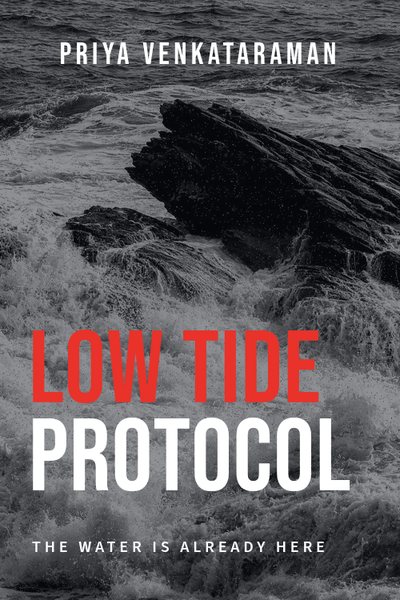

Halfway through Low Tide Protocol, Anika Rao stands on the top deck of a municipal parking garage with a laptop balanced on the hood of a stranger's car and watches the water climb the ramp beneath her one level at a time. The screen says the surge will crest in ninety minutes. The ramp says otherwise. "The model was never wrong about the water," Priya Venkataraman writes. "It was only ever wrong about the people who read it."
That sentence could stand as the thesis of this sharp, frightening and occasionally frustrating debut. Anika is a flood modeler for a mid-sized coastal city, the kind of analyst who presents to the council in April and is forgotten by May. In the hours before a hurricane makes landfall, she discovers that the city's evacuation plan was built on an assumption someone knew was false. The routes out of the low neighborhoods are timed for a storm that arrives slower and smaller than the one now bearing down. The plan was designed to fail, and it is about to.
A clock you can trust
Venkataraman is a working coastal hydrologist in Norfolk, Virginia, and she built her storm the way she would at work, then wrote the book to its clock. Each chapter opens with the hour and the water level above normal tide, and the numbers only go one way. This is a simple device, and it is devastating. By the time a chapter begins at 2:40 a.m. with a reading of 7.3 feet, you do not need anyone to tell you what has happened to Dorrance Avenue.
The water itself is the best-drawn character in the novel. It finds storm drains and runs backward through them. It lifts cars and sets them down gently in the wrong intersection. It fills a hospital basement where the backup generators live. Venkataraman writes about hydraulics with the calm authority of someone who has stood in them, and she never overexplains. One line about a pump station ("It was built to move rain, and this was not rain") does more than a page of exposition.
"Every map is a promise, and this one had been drawn by someone who planned to be somewhere else."
Anika is good company, too. She is stubborn, underslept, funny in a dry way, and physically brave in a manner the book takes seriously. She runs, and in the second half, when the roads are gone, that becomes a plot point rather than a character note. Her fear feels earned. So does her anger.
The trouble with the humans
The weakness here is the people who designed the plan to fail. The central antagonist, a deputy city manager named Grant Whitcomb, is a collection of reasonable-sounding sentences in an expensive raincoat. We are told he signed off on the flawed assumptions to protect a waterfront development, but we never see him weigh that choice or feel its cost. His scenes read like briefings. When he finally faces Anika in a flooded council chamber, the confrontation is loud and strangely weightless, because we have never believed he was a person.
The dialogue in the office scenes also leans toward the expository. Characters tell each other things they both already know, for the benefit of a reader who could have been trusted to catch up. And a late romance between Anika and a county emergency manager feels bolted on, as if someone worried the book needed a kiss before the credits.
These are real flaws, but they are the flaws of a first novel by someone who plainly understands the water better than she understands the villains. That is the right way around for a book like this.
Where it lands
The final eighty pages, in which Anika tries to get a revised evacuation order to the people who need it while the cell network fails around her, are as tense as anything the genre has offered this year. Venkataraman refuses easy rescues. Some streets are reached in time and some are not, and the novel is honest about which ones and why. One brief scene, in which Anika reads a list of addresses aloud to a volunteer with a boat, is harder to read than any gunfight.
"Five minutes," Anika thinks near the end, "was the difference between a map and a funeral." The book makes you feel every one of those minutes.
The Verdict
Low Tide Protocol has a cardboard villain and some clumsy talk in its meeting rooms, but its storm is unforgettable and its heroine is worth following through every foot of water. Venkataraman has written a thriller with real knowledge in its bones. Read it before the next hurricane season, then look up your own evacuation route.
Low Tide Protocol by Priya Venkataraman (Northwater Books, 368 pages, $29) is out now.
Features writer. Marcus reports on publishing, independent bookstores and how new authors break through.